General
Attack Surface Sprawl: Why Most SMBs Don't Actually Know What They're Exposing to the Internet
October 7, 2026
General
Earlier this year, Gartner introduced Continuous Offensive Security Testing, or COST, as a framework for rethinking how organisations approach offensive security validation. Rather than treating penetration testing as a periodic, calendar-based exercise, COST reflects a broader shift toward continuous, change-triggered testing that better aligns with modern software delivery.
For years, penetration testing has been treated as a scheduled event. A team books a test, waits for consultant availability, receives a report, fixes what it can, and returns to normal operations until the next audit cycle.
That model is now struggling to keep up.
Modern attack surfaces change daily. New APIs go live, cloud configurations evolve, third-party packages are updated, and software teams deploy code—all at breakneck speed. In many modern organisations, code is shipped multiple times a day.
In these environments, a point-in-time test still has value, but it no longer provides the continuous assurance security leaders need.
Gartner’s 2026 discussion of COST steers the industry in a new direction. That direction is clear: security testing must move from calendar-based exercises to continuous, trigger-driven validation that reflects how systems actually change.
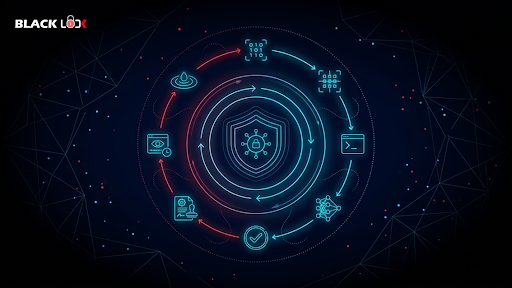
Continuous Offensive Security Testing is an operating model that brings offensive testing closer to the pace of technology change. Instead of relying only on annual or twice-yearly tests, COST activates when risk changes.
That change might be a new software release, a newly exposed service, an infrastructure update, a fresh vulnerability in a dependency, or threat intelligence that makes an existing exposure more urgent.
COST also brings together disciplines that have often been managed separately:
COST strengthens application security by answering a practical question: can this exposure actually be exploited in our environment?
That distinction matters. Discovery tools can find thousands of potential issues, while organisations continue to face talent and budget constraints. Validation helps teams understand what is real, what matters, and what should be fixed first.
A mature COST programme does not solely rely on increased scanning activities. It combines automation, expert judgement, threat context, and reliable evidence.
Security risk does not wait for a quarterly review. Testing should be triggered by meaningful change, such as:
This allows validation to happen when it is most useful, not weeks or months later.
COST works best when teams understand why a change may be risky before testing begins. Threat modelling helps define likely attack paths, high-value assets, trust boundaries, and business logic risks.
Without that context, testing can become broad but shallow. With it, offensive testing becomes focused, efficient, and aligned to actual business exposure.
Automation and AI are essential for speed and scale. They can run repeatable checks, perform API fuzzing, analyse tool output, identify duplicate findings, and support faster remediation.
Despite all that, human testers remain critical. They bring context, creativity, and accountability. Business logic flaws, chained exploits, and novel attack paths still require expert judgement.
The future of offensive security is not AI replacing people. It is AI taking on repetitive work so skilled testers can focus on what machines miss.
A strong COST programme should produce a structured record of what was tested, when it was tested, what was found, how it was prioritised, and whether remediation was validated.
That evidence matters for security teams, developers, executives, and auditors. It turns testing from a static PDF into an ongoing source of operational truth.
Long before Continuous Offensive Security Testing became formalised industry terminology, Blacklock.io was built around the same operational model: moving penetration testing away from slow, consultant-led cycles and towards continuous, customer-controlled assurance.
Blacklock combines automation, AI-assisted workflows, and expert manual testing in a single PTaaS platform. Customers can initiate testing on demand, run scheduled vulnerability scans, manage findings from one dashboard, and integrate results directly into their development workflows.
Its coverage includes:
This ecosystem gives organisations a practical way to operationalise COST without building a full in-house offensive security function.
One of the biggest gaps in traditional security testing is the handover between tools, consultants, and development teams. Scanner output can be noisy, producing large volumes of false positives and duplicate findings. Reports can be slow to arrive. Developers may receive findings without enough context to fix them quickly.
Blacklock addresses this by bringing the workflow into one platform.
A key capability is Blacklock’s interpretation layer, which parses and de-duplicates tool output to create contextualised vulnerability records on the customer dashboard. This helps reduce manual triage effort and gives teams clearer, more actionable results.
The platform also supports AI-assisted remediation guidance, helping developers understand how to address vulnerabilities in the context of their technology stack.
COST is not just a technical testing model. It changes how organisations measure, prioritise, and communicate security risk.
Instead of relying on periodic penetration tests for assurance, security leaders can maintain a more current and evidence-based understanding of their organisation’s exploitable risk. They can identify which systems changed, which assets were tested, which vulnerabilities remain open, and whether remediation has been validated.
This helps security teams prioritise and align efforts more closely with product delivery cycles. The operational benefits are equally important for software teams.
Through platforms that support COST principles, such as Blacklock.io, findings can move directly into existing development tools like Jira, GitHub, GitLab, or Azure DevOps instead of remaining isolated in static PDF reports.
Developers can remediate vulnerabilities earlier in the development lifecycle, validate fixes more quickly, and reduce the delays caused by repeated handovers between security and engineering teams.
For executives and boards, this creates a more measurable and transparent security posture. Instead of asking whether a penetration test was completed this year, leaders can better assess whether exposure is decreasing over time and whether remediation activities are actually reducing risk.
Annual penetration testing will continue to play an important role, particularly for critical systems, compliance obligations, and high-risk environments that require deep manual assessment.
However, point-in-time testing alone is no longer sufficient for organisations operating modern cloud, SaaS, and DevOps environments where applications, infrastructure, and dependencies change continuously.
Security teams increasingly need testing models that can validate security posture as those changes occur. This includes identifying whether vulnerabilities are genuinely exploitable, confirming whether remediation efforts have been successful, and maintaining a measurable record of risk reduction over time.
The urgency to meet these needs is a key driver of Continuous Offensive Security Testing.
Platforms such as Blacklock.io help organisations operationalise this approach by combining continuous vulnerability scanning, manual penetration testing, automated security validation, and developer-integrated remediation workflows within a single platform.
Join our newsletter today and enhance your knowledge with valuable insights. It's quick, easy, and free!