General
The 72-Hour Clock: What NZ’s Privacy Act and Breach Notification Rules Actually Require of SMBs
July 30, 2026
General
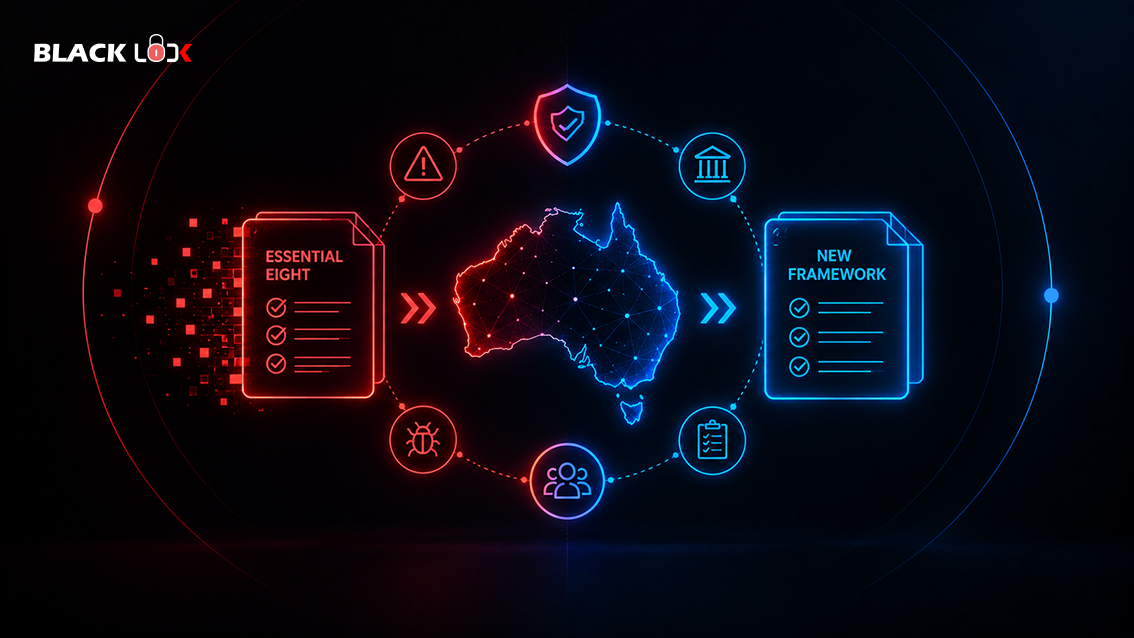
For nearly a decade, the Essential Eight has given Australian organisations a practical baseline for reducing common cyber risks. That baseline is now entering a transition period.
In June 2026, the Australian Signals Directorate (ASD) announced plans to evolve the Essential Eight into a broader “Essentials” series. The Essential Eight will remain active during the transition, but ASD expects to begin deprecating it around June 2027 and retire it around June 2028.
For Australian businesses, this is not a signal to stop Essential Eight work. ASD has said existing investments will remain relevant. The bigger message is that security guidance is expanding to reflect environments that are more cloud-based, interconnected and AI-enabled than the landscape for which the original Essential Eight was designed.
Australian businesses should use the transition period to strengthen their existing security programmes and prepare for the broader, more adaptable approach ASD is now developing.
ASD’s proposed Essentials series is intended to provide prioritised, threat-informed mitigations for contemporary technology environments. It is grounded in the Information Security Manual (ISM) and is designed to give organisations more flexibility in how they achieve security outcomes.
The first planned chapter, Essentials for enterprise IT, will evolve the current Essential Eight guidance. ASD has said additional chapters will follow, with future coverage expected to extend to other technology environments. Reporting around the consultation has identified operational technology (OT) and cloud as likely areas of focus, while agentic AI has also been discussed as a possible future area because risks such as prompt injection and the identity and access requirements of non-human entities do not fit neatly into traditional controls.
That represents a meaningful change in structure. Instead of trying to make one maturity model stretch across every technology stack, the Essentials series can address different environments on their own terms.
Importantly, the transition is gradual. ASD has said organisations already using the Essential Eight can expect strong alignment between their existing controls and the new guidance. There is no reason to abandon patching, multi-factor authentication, application control, backups, restricted administrative privileges or the other protections that organisations have already implemented.
Many elements of the Essential Eight are still relevant, but the technology landscape around it has changed substantially.
Cloud services introduce shared-responsibility models that do not map cleanly to traditional on-premises controls. SaaS platforms can place parts of the technology stack outside an organisation’s direct management. Operational technology presents different availability, safety and lifecycle considerations. AI systems introduce attack paths involving prompts, models, agents, tools and data flows that did not exist when the Essential Eight first emerged.
ASD has also acknowledged another problem: threat tradecraft changes faster than a fixed maturity ladder. When new defensive expectations are absorbed into an existing maturity level, an organisation can appear to have gone backwards even though its actual security posture has not deteriorated.
The proposed Essentials model is intended to separate changing, threat-informed mitigations from a rigid maturity structure. In practice, that points towards a security programme that is more adaptable, more risk-based and more focused on whether controls achieve their intended outcomes.
There is no need for a rushed framework migration. The new Essentials series is still being developed, and organisations should avoid treating consultation material as if every detail were already final.
A sensible roadmap would focus on five actions:
That final point is particularly important because ASD’s wider direction extends beyond control implementation.
ASD has identified its Modern Defensible Architecture (MDA) work as an influence on the Essentials series. MDA emphasises layered defence, zero trust principles, secure-by-design practices and protection of the systems and data that matter most.
It also puts significant weight on validation. ASD’s MDA guidance says organisations can use activities such as penetration testing, threat modelling and failure testing to identify architectural and operational weaknesses. Its maturity indicators call for assurance testing that is repeatable, automatable and performed regularly with minimal human intervention, alongside regular assessment against current and emerging threats.
That does not mean every Australian company is suddenly required to perform continuous penetration testing. The right assurance model will depend on the organisation, its risk profile and any regulatory or contractual obligations.
However, the direction is clear: implementing a control is only part of the job. Organisations increasingly need evidence that controls remain effective after changes, releases, migrations and remediation work.
For organisations operating under the ISM, this direction has become even more explicit. ASD’s September 2026 security assurance guidance specifies vulnerability assessments and penetration tests for systems before deployment, before significant changes and at least every six months thereafter. The same guidance encourages the use of suitable AI models to augment vulnerability assessment and penetration testing activities.
For many businesses, readiness will come from improving existing security processes rather than buying an entirely new stack.
Start by reviewing where your current Essential Eight programme gives you strong coverage and where important environments sit outside it. Then connect that view to your broader risk management, architecture and assurance processes.
Useful assessment questions include:
The aim should not be to predict every final requirement in the forthcoming Essentials chapters. It should be to build an assurance programme flexible enough to absorb new guidance without needing to start again each time the threat landscape changes.
For organisations moving towards more continuous, evidence-backed assurance, several Blacklock capabilities can support that shift. Three are especially relevant to the direction outlined above.
Agentic AI vulnerability validation and revalidation lets teams trigger automated retesting after remediation, helping them confirm whether fixes are effective instead of relying on ticket status alone.
Private agents extend continuous vulnerability scanning to internal and on-premises infrastructure that is not exposed to the internet, helping organisations assess private systems alongside their external attack surface.
AI application and LLM security testing covers AI-powered applications, LLM integrations, agents, RAG pipelines and MCP workflows, including risks such as prompt injection, sensitive data disclosure, unsafe tool use and excessive agency.
These capabilities support three themes discussed above: repeatable testing and validation, ongoing assurance across a wider attack surface, and security testing for emerging AI-enabled systems. They do not replace the Essential Eight or, by themselves, establish alignment with future Essentials guidance, but they can help organisations build the assurance practices that ASD’s evolving guidance increasingly emphasises.
Want to see how continuous security assurance could work across your environment? Book a demo and explore vulnerability scanning, expert-verified findings and ongoing security testing in one platform.
Join our newsletter today and enhance your knowledge with valuable insights. It's quick, easy, and free!